
- Full program
- Aged Care, Disability
- Mental Health, Wellbeing
- Economic Security, Jobs
- Community Development
About this practice
What Lively Does
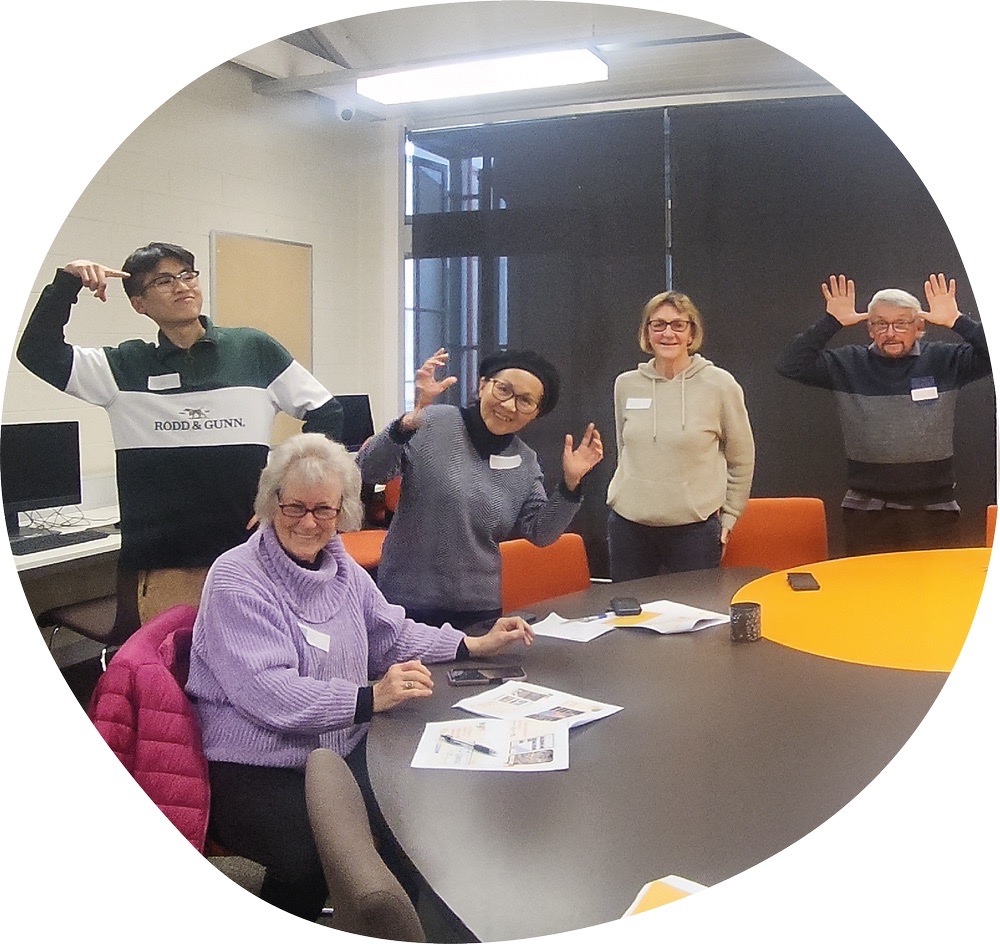
Lively employs young people aged 18 to 25, with no aged care experience required, and matches them with older community members for regular, relationship-based, practical support: tech help, light gardening, transport, social outings, decluttering and life story recording.
Why License This Practice
- A fully tested hiring, training and matching model built over ten years of direct delivery in Melbourne
- Deliberately avoids "aged care" framing to attract a completely new pool of young applicants
- A values-first, low-cost workforce model that partner organisations (councils, aged care providers, libraries) can stand up quickly
- Positions older and younger people as equals, doing things together, rather than one-directional caring
"It's like having her daughter back." - Maree, 82, a Lively program participant
What You Get
The Field Guide walks you through Lively's hiring criteria and process, its practical (not policy-heavy) training approach, its matching methodology, its tailored service menu, and its partnership-building playbook, so you can stand up your own values-led intergenerational program.
Who it’s for
Councils, libraries, aged care providers, retirement villages and community organisations wanting an affordable, values-led way to reduce social isolation among older people while creating meaningful entry-level employment for young people.
Target population
Two groups at once: older people experiencing social isolation, referred through partner councils, aged care providers, libraries, retirement villages and housing providers; and young people aged 18 to 25, most with no aged care experience or qualifications, seeking flexible, values-aligned, entry-level employment. Typical older Members live alone, have a shrinking social network, and need everyday practical support (tech help, transport, gardening, decluttering) rather than clinical care. Typical young Helpers are studying or between opportunities, and are drawn to the role by its values and community impact, rarely by an existing interest in aged care.
How it’s delivered
- One-to-one sessions
- Group work
- Outreach visit
- Digital technology
- Online
- Self-paced resources
Outcomes
Short Term Outcomes
- Regular, trusted, weekly or fortnightly contact between a young Helper and an older Member
- Increased digital confidence and reduced tech-related shame or frustration for older people
- Practical needs met (transport, light gardening, domestic tasks, life admin) within the Member's own home or community
Long Term Outcomes
- Reduced social isolation and improved sense of value, meaning and connection for older people
- Meaningful, confidence-building employment and professional development for young people, many of whom had never worked with older people before
- Reduced ageism through sustained, everyday intergenerational contact
- Increased overall aged care workforce capacity and an appealing new entry point into the sector
- Stronger community resilience and social fabric
Evidence
Direct Evidence
No independent, external evaluation of Lively's outcomes has been identified in the materials reviewed. Lively is an accredited home care provider, having scaled its service nationally following its initial pilot, a signal of program viability and partner/regulator confidence rather than a formal outcomes evaluation. (Source: Roots of Change case study)
Internal Evidence
- A decade of continuous direct delivery in Melbourne (2015-2025)
- Incoming Helpers consistently rate "finding a workplace that aligns with my values" as their top reason for applying, supporting Lively's values-first hiring strategy
- Participant testimonial: 82-year-old Maree describes her Lively Helper relationship as "like having her daughter back" (Roots of Change case study, 2019)
- Sustained media coverage across ABC News, ABC Radio Melbourne, RMIT, Ageing Agenda and Pro Bono, indicating ongoing public and sector interest
Contributing Evidence
Lively's own materials cite that 1 in 5 older people experience social isolation (with research described as showing health impacts comparable to smoking or obesity), that 23% of young Australians are unemployed or underemployed, and that Australia needs an estimated 110,000 additional direct aged-care workers by 2030. No original source is cited for these figures in the materials reviewed, so they should be treated as the problem context Lively uses to frame its model, not as validated findings about Lively's own effectiveness.
As an emerging-evidence practice grounded in a decade of practitioner experience, licensees are encouraged to learn from and adapt this model to their own context, and to collect and share their own outcome data.
Implementation considerations
- Requires a values-first hiring process, not a qualifications-based one; budget time for a properly staffed, empathetic interview and screening process
- Needs a partner network (councils, aged care providers, libraries, retirement villages) to refer older Members and, in many cases, to fund the service through government-subsidised programs
- Requires police, Working with Children and visa/citizenship checks for all young Helpers before deployment
- Needs a practical, in-person training program (not just policy documents), plus a proactive follow-up and check-in process during each Helper's first 3 to 6 months
- Requires a genuine "no blame" incident response process and an accessible way for Helpers to remove themselves from a session at any time
- Budget for fair, above-award pay and transparent salary practices, which Lively identifies as foundational to a healthy culture
Share what works.
ShareCraft is where organisations in the social sector find, license and share practices that work. Join free to open this Practice Guide.